
If your shipments arrive crushed, your damage claims are climbing, or you think you’re paying more in dimensional weight charges than you should be, the issue often traces back to one thing: you’re using the wrong box for the job. Corrugated boxes are one of those everyday materials that most businesses don’t even think twice about until something goes wrong. But it’s important to consider all the different factors that go into choosing a corrugated box before making a decision about which one to use. If you match the right container to your product, shipping method, and storage environment, then they will protect your goods, lower your damage rates, and keep packaging costs in check.
This guide walks you through what to think about when deciding which corrugated material to use, whether you’re shipping a few hundred parcels a week or moving heavy industrial goods on pallets every day.
- Step #1: Understand your product and shipping conditions
- Step #2: Choose the correct wall and flute type
- Step #3: Match the strength rating to your load
- Step #4: Pick the right box style for the job
What are corrugated boxes, and why does the right one matter?
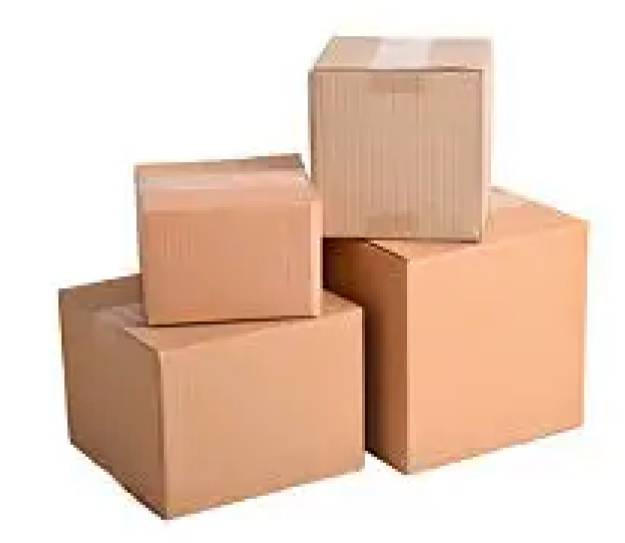
Corrugated boxes are containers made out of corrugated material; a fluted inner layer of paper sandwiched between two flat outer linerboards. Those interior wavy flutes create air pockets that absorb impact and resist crushing, giving the box a significant strength-to-weight advantage over solid paperboard. The result is a lightweight, recyclable container that can be engineered for everything from a 2 lb book mailer to a 2,000 lb machinery shipment.
Choosing the wrong corrugated box can lead to:
- Crushed shipments and damage claims that erode your margins
- Higher dimensional weight charges from oversized packaging
- Extra money spent on over-engineered boxes that you don’t need
- Wasted warehouse space and slow pack-out times
Avoiding all of these problems begins with understanding what your specific product needs are.
Step #1: Understand your product and shipping conditions
Before ordering your first box, it’s important to take a hard look at what you’re shipping and how it’s getting there. Different products have very different requirements, and a container that’s perfect for something like boxed apparel will likely fail if filled with bagged hardware. Here are the factors to consider:
Product weight
Heavier products need stronger boxes. As a benchmark, items under 65 pounds usually do fine in a 32 ECT single wall box, while items in the 65 to 95 pound range will typically need at least a 44 ECT box. Anything heavier should use a double wall corrugated container. ECT stands for Edge Crush Test, and we’ll discuss it more in step #3.
Product fragility and shape
Delicate items, oddly shaped products, and anything with sharp edges or protrusions need a thicker board, custom inserts, or both. For high value or breakable goods, the extra cost of a stronger box pays for itself in reduced damage claims.
Shipping and handling conditions
How is the box getting to its destination? Parcel carriers like UPS, FedEx, and USPS often handle individual packages roughly, so puncture and burst resistance matter most. For freight and pallet shipments, you have to deal with vertical compression from stacking, so edge crush strength is very important.
Storage and environmental conditions
Where will the boxes live before and after they’re packed? High humidity (over 60%) can significantly reduce corrugated strength (in some cases up to 50%), so warehouses without climate control or shipments to humid regions may need a higher rated board to compensate. Outdoor storage, refrigerated environments, and long term stacking all affect your calculations and must be taken into account.
Step #2: Choose the correct wall and flute type
Once you know what you’re shipping and how you’re sending it, the next consideration is the board itself. Two numbers do most of the work here: how many layers of corrugated go into the wall, and how tall the flutes are inside it.
Wall construction
- Single wall: One layer of fluting between two outer sheets. This design is what most shipping boxes are made of, and it’s generally tough enough for parcel deliveries, retail packaging, and lighter pallet loads.
- Double wall: Two layers of fluting separated by a sheet in the middle, with outer sheets on top and bottom. The extra layer adds noticeable rigidity, making it a better fit for heavier products, fragile items, freight shipments, and anything that will spend time stacked in a warehouse.
- Triple wall: Three layers of fluting and four outer sheets. This construction is essentially a corrugated crate, used for industrial parts, equipment components, and bulk shippers where a failed box means expensive problems.
Flute types
Flute size is the height of the wavy arches inside the board. Taller flutes give you more cushioning and vertical support, and shorter flutes give you a smoother surface that prints better and folds more cleanly.
- A flute (about 1/4" thick): The thickest type of flute that provides excellent cushioning and stacking strength, making it suitable for fragile or heavy products.
- B flute (about 1/8" thick): Thinner than A flute and C flute, this material resists punctures and gives you a flatter surface for graphics, perfect for retail and customer-facing containers.
- C flute (about 3/16" thick): The everyday choice for shipping cartons. It splits the difference between A and B, with enough height to absorb hits and enough density to print on without obvious ridging.
- E flute (about 1/16" thick): Thin enough to feel almost like sturdy paperboard, with a tight, smooth face that is great for high resolution printing. It’s common on cosmetics boxes, gift packaging, and product cartons.
- F flute (about 1/32” thick): The thinnest type of flute that is generally used for corrugated boxes, F flute allows detailed print quality and is popular for luxury packaging and small electronics.
Step #3: Match the strength rating to your load
If you flip over corrugated boxes, you’ll usually find a round stamp on the bottom called the Box Maker’s Certificate. That stamp is where the manufacturer reports how the board was tested. Two tests dominate the industry, and they answer different questions about when the box will fail.
Edge Crush Test (ECT)
ECT measures how much downward pressure a section of board can absorb on its edge before it folds. A 32 ECT board takes 32 pounds of force on every inch of edge before buckling. ECT is the right number to look at when boxes will be stacked.
Mullen Burst Test
The Mullen test measures how hard you have to push on the side of a box before something tears through and is measured in pounds per square inch. Burst strength matters most when boxes get tossed around individually rather than stacked.
Common ratings
ECT: 32 lb/in
Mullen Burst Test: 200 lb/in2
Standard parcel shipping, ecommerce, and lighter palletized loads up to about 65 pounds.
ECT 44 lb/in
Mullen Burst Test: 275 lb/in2
Heavier consumer goods and items palletized four to six boxes high. Suitable for shipments up to about 95 pounds.
ECT: 48 lb/in
Mullen Burst Test: 350 lb/in2
Extra heavy duty for industrial parts, rough handling, and freight where carriers require reinforced packaging heavier parcels.
As a general rule, use the lowest ECT or burst rating that adequately protects your products. Choosing corrugated boxes that are too weak for your items or conditions risks damage and customer complaints, but using options that are too strong wastes money on every box you order.
Step #4: Pick the best box style for your needs
Even with the right construction, flute, ECT, and burst rating, a box still has to be cut and folded to suit your packaging process. Two cartons made from the same board can behave very differently, depending on their style. Here are the most common types:
- Regular Slotted Container (RSC): The classic shipping box. All four flaps fold inward, with the two outer flaps meeting in the middle. The default for ecommerce, distribution, and most general purpose shipping.
- Half Slotted Container (HSC): An RSC with the top flaps removed. Useful for parts bins and in-process containers that get opened repeatedly.
- Full Overlap Container (FOL): Outer flaps long enough to fully overlap. The extra layer of board adds stacking strength and protects against box cutter slips, making it a good fit for heavy or fragile shipments.
- Die-cut boxes: Custom shaped, with optional features like finger holes, ventilation slots, or built-in display panels. Choose die-cut when an off-the-shelf RSC leaves too much empty space around an unusual product.
- Pads, sheets, and partitions: Inner packing pieces that often determine how well a box can do its job. Pads and sheets cushion products against the sides, while partitions create individual cells so breakable items can ship together without touching.
Tips to get the most out of your corrugated boxes
Once you consider all the factors, follow these general best practices for choosing the best corrugated material containers for your requirements:
- Right size whenever possible. Aim for only about two inches of clearance around your product. Oversized boxes cost more in dimensional weight charges, void fill, and warehouse space.
- Measure interior, not exterior, dimensions. Boxes are sold by inside dimensions because that’s what your product fits into. Carriers measure the outside, so account for board thickness when calculating dimensional weight.
- Don’t reuse boxes for outbound shipments. Strength drops every time a corrugated box is opened and resealed. Use new boxes for shipping and save the used ones for internal moves or storage.
- Store boxes flat and dry. Keep flat-pack inventory off the floor, away from outside walls, and out of direct sunlight to preserve strength until you use it.
Wes-Co Enterprises is a local packaging partner that can help
Determining the right corrugated boxes depends on your specific products, your shipping methods, your stacking and storage conditions, and your budget. Getting it wrong shows up in damage claims, freight bills, and frustrated customers. That’s where we come in.
At Wes-Co, we’ve been helping businesses in the North Carolina Foothills, High Country, and Catawba Valley solve their packaging challenges for decades. We’re close enough to come out to your facility, see what you’re shipping, and have a real conversation about what’s going to work, not just what sounds good on paper.
We carry the full range of corrugated packaging, including regular slotted containers, heavy duty and triple wall cartons, pallet sized shippers, die-cut boxes, custom printed cartons, inner packing components, and more.
Give us a call today to schedule a consultation and find the right corrugated boxes for your operation!
Frequently Asked Questions (FAQ)
©2026 Wes-Co Enterprises
Created by Winsby Inc.