
If your pallets are shifting during transit, your film is tearing mid-wrap, or your team is burning through rolls faster than expected, the problem often comes down to one thing: you’re using the wrong wrap for the job. Stretch wrap is one of those materials that is typically overlooked until something goes wrong. But when you match it correctly to your load type, wrapping method, and volume, it quietly does a lot of the heavy lifting to keep your products protected. It stabilizes them, reduces damage claims, and helps keep your operation running efficiently.
This guide walks you through the key steps to take when selecting your material, whether you are hand wrapping a handful of pallets each day or running a high volume, fast paced facility with fully automated stretch wrapping machines.
- Step #1: Understand your load
- Step #2: Consider film gauge
- Step #3: Select the right type of stretch wrap film
- Step #4: Match the film to your application method and volume
What is stretch wrap, and why does it matter?
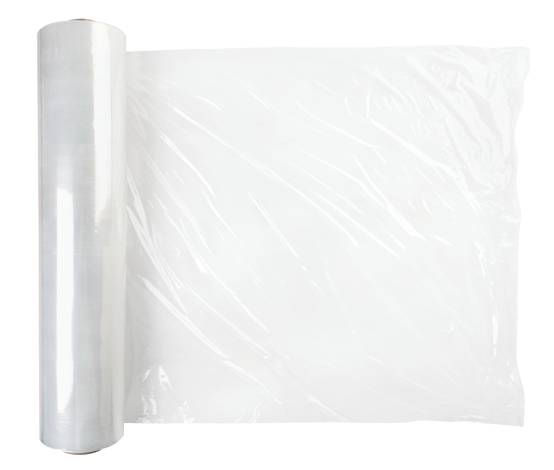
Stretch wrap (also called pallet wrap or stretch film) is a type of highly elastic plastic film, commonly made from linear low density polyethylene (LLDPE). It is wrapped tightly around pallet loads to bundle and stabilize them during shipping and storage. Unlike shrink wrap, which needs heat to conform to the shape of the load, stretch wrap works through tension. The film is stretched as it is applied, and its natural tendency to retract creates a tight, secure hold. The result is a protective shield that resists shifting, moisture, dust, and tampering.
Choosing the wrong film type of application method for your wrap can lead to:
- Load failures and product damage
- Excessive film consumption and extra material costs
- Worker fatigue and inconsistent wrapping quality
- Downtime from film breaks when using automated machines
Using the correct kind of stretch wrap helps you avoid all of these issues. But first, you have to know your load characteristics, wrapping method, and overall throughput.
Step #1: Understand your load
Before stretch wrapping, you have to first take a close, hard look at your products. Different loads will have very different requirements, and a film that works perfectly for uniform cardboard boxes may be completely wrong for irregularly shaped metal parts or items with sharp corners.
Load weight
Heavier pallets will need a film with greater holding force and puncture resistance. A lightweight film might be fine for a 200 lb load of paper products, but it will fail under the stress of a 2,000 lb load of industrial components. If your pallets are on the heavier side, look for films with at least an 80+ gauge thickness.
Load shape and stability
Uniform, well stacked products are the easiest to wrap. Irregular shapes or items that protrude, lean, or have uneven weight distribution, require a film with higher cling force and puncture resistance, in order to conform to the load without tearing.
Load contents
Sharp edges, corners, or protruding hardware can punch through standard films. If you are wrapping items with these features, you’ll want a thick film with a 100+ gauge to help avoid breakage. On the other end of the spectrum, fragile goods may benefit from a softer, more forgiving film to avoid putting too much compression stress on the packaging.
Environmental and operational conditions
Where are your pallets going after they’re wrapped? Products stored outdoors or exposed to direct sunlight need UV resistant film to prevent degradation. If color coding by product type, destination, or customer is part of your warehouse process, then you’ll want colored stretch wrap to help your team stay organized and reduce errors and delays.
Step #2: Consider film gauge
Film gauge refers to its thickness and is one of the most commonly misunderstood aspects of stretch wrap selection. Thicker is not always better, and it’s almost never cheaper. In general, you want to use the lowest gauge possible that adequately packages and protects your loads. Here are some examples of products and the film thickness that usually goes along with them:
- 47 – 60 gauge (light duty): Light, uniform loads like boxed food products, small consumer goods, and stacked paper reams.
- 60 – 80 gauge (standard): Pallets of bagged materials, like dog food, canned goods, mixed retail goods, and building materials in cardboard.
- 80 – 100 gauge (heavy duty): Industrial products, auto parts, bagged concrete or sand, and loads with sharp corners or edges.
- 100+ gauge (extreme duty): Exceptionally heavy loads like metal castings or machinery components, unstable stacks, or applications where the cost of failure is very high.
Step #3 Select the right type of stretch wrap film
Not all stretch wrap is created equal. Film formulation varies significantly based on the raw materials used, its manufacturing process, and any additives blended into it. Here are the primary categories:
Standard cast stretch film
Cast film is the most common type of stretch wrap and is manufactured through a cast extrusion process that produces a clear film that is quiet and easy to apply. It has good cling force on one or both sides and is well suited to most general purpose applications.
Blown stretch film
This type of film is created using a blown extrusion process, resulting in a more durable and tear resistant stretch wrap than cast options. It has a tacky surface, excellent strength, and high puncture resistance, making it perfect for heavy or irregular shaped loads and long distance shipments.
Pre-stretched film
An alternative to conventional film, this type of wrap arrives already stretched, making it easier to apply by hand. It also uses less material per pallet, producing lower amounts of plastic waste and reducing consumable costs.
High performance and nano-layered films
Advanced, multi-layer and nano-layered stretch wraps achieve unmatched puncture resistance, holding force, and clarity, even at lower gauges. These options are often more expensive per roll, but you may be able to wrap your pallets using less material, minimizing your overall cost per load.
Step #4: Match the film to your application method and volume
Even the best stretch wrap won’t perform correctly if it’s mismatched to the equipment or process being used. Here are a few practical checkpoints to consider:
- If you’re hand wrapping, make sure your roll cores fit your dispensers and that roll weight is manageable for your team.
- When using a stretch wrap machine, verify that your film roll dimensions (core size, roll width, roll diameter) are compatible with the machine’s film carriage.
- Consider your daily pallet volume. High volume operations benefit from large roller sizes that require fewer changeovers. Lower volume operations may prefer smaller, more manageable rolls.
- Think about your storage environment for the film itself. Stretch wrap that is stored in extreme heat, cold, or direct sunlight can degrade before it’s ever used.
How to wrap a pallet: Best practices
Choosing the correct film is only half the battle. How you wrap a pallet matters just as much as what you’re wrapping it with. Whether you’re applying film by hand or running an automated line, a few basic principles apply:
- Start at the base: Anchor the film at the base of the pallet first, wrapping around the pallet boards themselves to lock the load to the pallet. This method prevents the entire load from sliding forward during transport.
- Overlap each pass: Each revolution of film should overlap the previous one by at least 50%, ensuring complete coverage and preventing gaps where the load can shift.
- Apply consistent tension: Too little tension leaves the load loose; too much can crush fragile goods or cause film breaks. Find the right tension setting for your specific load.
- Finish at the top: After reaching the top of your load, reverse direction and wrap back down to reinforce the middle section. Finish with a few extra wraps at the base to lock everything in place.
Wes-Co Enterprises is a local packaging partner that can help
Choosing the right stretch wrap is an important and complex process. There’s no one-size-fits-all approach. The right choice depends on your specific loads, your volume, your equipment, and your budget—and it can often feel overwhelming. That’s where we come in.
At Wes-Co, we’ve been assisting businesses in the North Carolina Foothills, High Country, and Catawba Valley with their packaging challenges for decades. We’re close enough to come out to your facility, see your operation firsthand, and have a real conversation about what’s actually going to work, not just what sounds good on paper.
We carry the full range of stretch wrap options, from standard hand film to high performance machine grade rolls. Our team can also help you evaluate whether a stretch wrap machine might be a worthwhile investment for your business.
Give us a call today to schedule a consultation and determine the best stretch wrap for your operation!
Frequently Asked Questions (FAQ)
What is the difference between hand stretch wrap and machine stretch wrap?
Hand wrap is a lighter film applied manually; machine wrap is formulated for automated equipment and is not interchangeable with hand film.
What gauge stretch wrap should I use?
Light loads typically call for 47–60 gauge, general-purpose loads for 63–80 gauge, and heavy or sharp edged loads for 80 gauge and above.
How many times should I wrap around a pallet?
Plan for 3–5 wraps at the base to anchor the load to the pallet, then 2–3 full passes up the height of the load with at least 50% overlap.
What is pre-stretched film, and when should I use it?
Pre-stretched film is already elongated at the factory, making it lighter and easier to apply by hand — a good fit for lighter loads and ergonomics conscious operations.
Can stretch wrap be used for outdoor or long term storage?
Standard film degrades under UV exposure, so outdoor or long term storage applications require a UV resistant stretch wrap formulation.
Does Wes-Co deliver stretch wrap locally?
Yes — Wes-Co serves the Catawba Valley and surrounding foothills region and can personally deliver products to your facility with minimal shipping costs.
©2026 Wes-Co Enterprises
Created by Winsby Inc.