
If your boxes pop open in transit, won't stay sealed in the cold, or need a double layer of strips just to hold shut, the issue usually comes down to one thing: you're using the wrong tape for the job. Packaging tape is one of those supplies most businesses grab without a second thought—until it fails and a shipment shows up damaged. But when you match the tape to your cartons, your contents, and the conditions they’ll travel through, it quietly does its job every time, holding boxes closed, lowering damage claims, and keeping your packaging operation moving.
This guide walks you through what to consider when deciding between the many packaging tapes on the market, whether you’re sealing a few dozen parcels a day by hand or running cartons through an automated case sealer.
- Step #1: Understand your cartons and contents
- Step #2: Match the tape thickness to the load
- Step #3: Choose the right adhesive
- Step #4: Pick the right width and application method
What is stretch wrap, and why does it matter?
Most packaging tape, also called carton sealing tape or box tape, is built from two parts: a thin plastic film backing, usually BOPP (biaxially oriented polypropylene), and a layer of adhesive on one side. The backing gives the tape its strength, while the adhesive does the gripping. The type of adhesive and the thickness of the tape are what separate a seal that holds firm from one that lifts at the corner.
Choosing the wrong carton sealing tape can lead to:
- Boxes that pop open in transit and arrive damaged
- Wasted material when workers apply extra strips to compensate
- Seals that fail in cold storage, heat, or high humidity
- Slow pack-out and downtime from tape that won’t stick or jams the machine
Avoiding all of these issues starts with understanding what you’re actually sealing.
Step #1: Understand your cartons and contents
Before ordering a single roll, take a close look at the boxes you’re closing and what’s going inside them. A tape that seals a clean, lightweight retail carton perfectly may peel right off a dusty, recycled box.
Carton weight
Heavier boxes put more stress on the seam, which calls for a thicker, stronger tape. A light film that’s fine for a 15 lb carton of apparel will stretch and split under a 60 lb box of hardware.
Box surface and condition
New, smooth corrugated takes adhesive easily. Recycled, dusty, or rough cartons are harder to bond to, and the more recycled content a box has, the more it resists a standard seal. Those surfaces need a more aggressive adhesive that grips imperfect cardboard.
Flap memory and fill level
Overstuffed boxes and cartons with stiff flaps put constant upward pressure on the seal. These containers require an adhesive with high initial tack that grabs and holds before the flaps can lift.
Storage and shipping conditions
Where do these boxes go after they’re sealed? Refrigerated and freezer storage, unheated warehouses, outdoor staging, long term storage, and humid environments all affect your tape. A seal that’s rock solid at room temperature can let go in a cold room if the adhesive isn’t built for it.
Step #2: Match the tape thickness to the load
Tape thickness is measured in mils, which is one-thousandth of an inch. The important thing to remember is that thicker isn’t always better when it comes to tape, and it’s never cheaper. As a general rule, use the thinnest tape that reliably holds your boxes closed. Here’s roughly how thickness lines up with the load:
- 1.6 – 1.8 mil (light duty): Small, lightweight cartons under about 30 lb—e-commerce parcels, document boxes, and retail goods.
- 1.9 – 2.0 mil (standard): The everyday workhorse for most shipping. Handles general cartons up to roughly 50 lb and balances strength against cost.
- 2.5 mil (heavy duty): Heavier or oversized boxes pushing past the standard range, and cartons with stiff flaps or rough handling ahead.
- 2.9 – 3.1 mil and up (extra heavy duty): The heaviest cartons, bulging or overstuffed boxes, and shipments where a failed seal means an expensive problem.
When you’re genuinely on the fence, step up one level. Your tape will almost always be cheaper than a damaged shipment. For the heaviest or highest value loads, reinforced or filament tape adds embedded fiberglass strands for tensile strength that standard film can’t match.
Step #3 Choose the right adhesive
Adhesive is where most of the real decision happens. Two boxes sealed with the same thickness of tape can perform completely differently depending on the adhesive underneath. Here are the main options:
Hot melt tape
Hot melt tape uses a synthetic rubber resin adhesive known for its quick, aggressive tack. It grabs fast and holds tight, which makes it a strong general purpose choice for sealing heavier or overstuffed cartons and boxes with stubborn flap memory. It also runs smoothly and quietly off the roll, so it’s a favorite for high speed hand and machine application. Its tradeoff is temperature: hot melt performs best in a moderate range (roughly 45°F to 120°F) and can soften in high heat or harden in deep cold.
Acrylic tape
Acrylic tape uses a water based acrylic adhesive on BOPP film. Its standout strength is range: acrylic tape holds across a much wider temperature band, roughly 32°F to 140°F, and stays reliable in high and low humidity. It also resists oxidation, so it won’t yellow or break down under UV and sunlight. That makes acrylic tape the go-to for long term storage, refrigerated and freezer environments, and any situation where you can’t control the conditions. The tradeoff is initial tack: acrylic grabs more slowly than hot melt, so it works best on clean, smooth boxes without stiff flaps that want to spring open.
Natural rubber tape
Natural rubber adhesive is the most forgiving of the three. It bonds to rough, recycled, dusty, and even slightly damp cartons that other tapes can’t handle, and it keeps its grip in cold storage. If your boxes are recycled or your environment is less than pristine, natural rubber tape is often the most reliable seal.
Water activated (paper) tape
Water activated tape, or gummed paper tape, works differently from the others: a starch adhesive is activated by moisture and bonds into the corrugated fibers, creating a permanent, tamper evident seal that often just requires one strip per box. Reinforced versions add fiberglass for serious holding power on heavy cartons and are popular for high value and security sensitive shipments.
A quick way to narrow it down: choose hot melt for strength and speed in moderate conditions, acrylic for wide temperature swings and long term storage, and natural rubber for rough or recycled boxes in tough environments.
Step #4: Pick the right width and application method
Even the right adhesive won’t perform if the tape is the wrong size for the box or mismatched to your equipment. Here are a few practical checkpoints:
- Width: Standard 2” tape handles most boxes up to about 24” wide. Step up to 3” tape for larger, heavier, or overstuffed cartons that need more surface area to hold the seam.
- Hand application: Make sure your roll core and length fit your dispensers, and choose a smooth, quiet unwind tape to reduce worker fatigue on a busy line.
- Machine application: If you run a case sealer, confirm the roll dimensions and core size match your machine, and use a machine grade tape formulated for automated equipment—hand and machine tapes are not interchangeable.
- Volume: Higher volume operations save labor with longer rolls (commonly up to 110 yards) that mean fewer changeovers; lower volume packers may prefer shorter, easier-to-handle rolls.
Best practices for a seal that holds
Once you’ve chosen the right packaging tape, a few application habits make it perform at its best:
- Use the H taping method for heavy boxes. Run a strip down the center seam and one across each end seam so the flaps can’t pull apart.
- Apply firm, even pressure. Adhesive needs contact to bond, so a dispenser with a good wipe down roller helps ensure the tape attaches to the box’s surface.
- Seal clean, dry containers. Dust and moisture on the flaps will undercut even the best adhesive.
- Store tape properly. Keep rolls out of extreme heat, cold, and direct sunlight, so the adhesive is at full strength when you use it.
Wes-Co Enterprises is a local packaging partner that can help
Choosing the right packaging tape depends on your specific boxes, your contents, your storage and shipping conditions, and how you apply it. Getting it wrong shows up in damage claims, wasted material, and frustrated customers. That’s where we come in.
At Wes-Co, we’ve been helping businesses in the North Carolina Foothills, High Country, and Catawba Valley solve their packaging challenges for decades. We’re close enough to come out to your facility, see what you’re sealing, and have a real conversation about what’s actually going to work, not just what sounds good on paper.
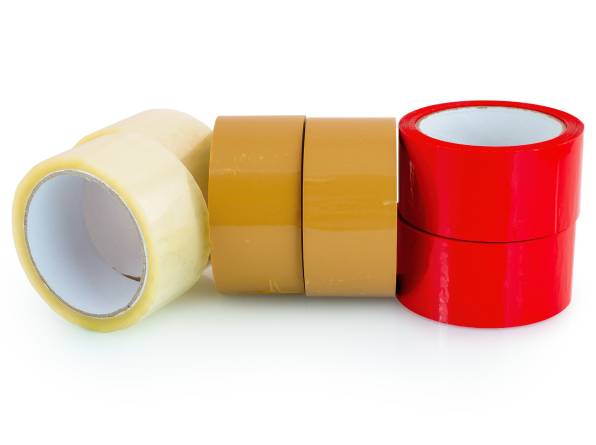
We carry the full range of carton sealing tape—acrylic, hot melt, and natural rubber—along with water activated paper tape, reinforced tape, bag sealing tape, color tape, and more. Our team can help you match the right option to your materials, equipment, and environment, so everything stays tightly sealed.
Give us a call today to schedule a consultation and find the right packaging tape for your operation!
Frequently Asked Questions (FAQ)
What is the difference between hot melt and acrylic tape?
Hot melt grips faster and holds heavier boxes but works best in moderate temperatures; acrylic tape holds across a wider temperature range and resists yellowing, making it better for cold storage and long term use.
What thickness of packaging tape do I need?
Light boxes under 30 lb do fine with 1.6–1.8 mil tape, general shipping up to about 50 lb calls for 1.9–2.0 mil, and heavier or overstuffed cartons need 2.5 mil or more.
What tape works best on recycled or dusty boxes?
Natural rubber adhesive is the most forgiving, bonding well to rough, recycled, and dusty cartons that cause other tapes to lift.
Should I use 2” or 3” tape?
2” tape handles most boxes up to about 24” wide; step up to 3” tape for larger, heavier, or overstuffed cartons.
Can I use the same tape by hand and in a machine?
No—hand tape and machine tape are formulated differently and aren’t interchangeable; use a machine grade tape sized to your case sealer.
Does Wes-Co deliver packaging tape locally?
Yes — Wes-Co serves the Catawba Valley, High Country, and surrounding North Carolina foothills, and can personally deliver packaging tape and other supplies to your facility with minimal shipping costs.
©2026 Wes-Co Enterprises
Created by Winsby Inc.